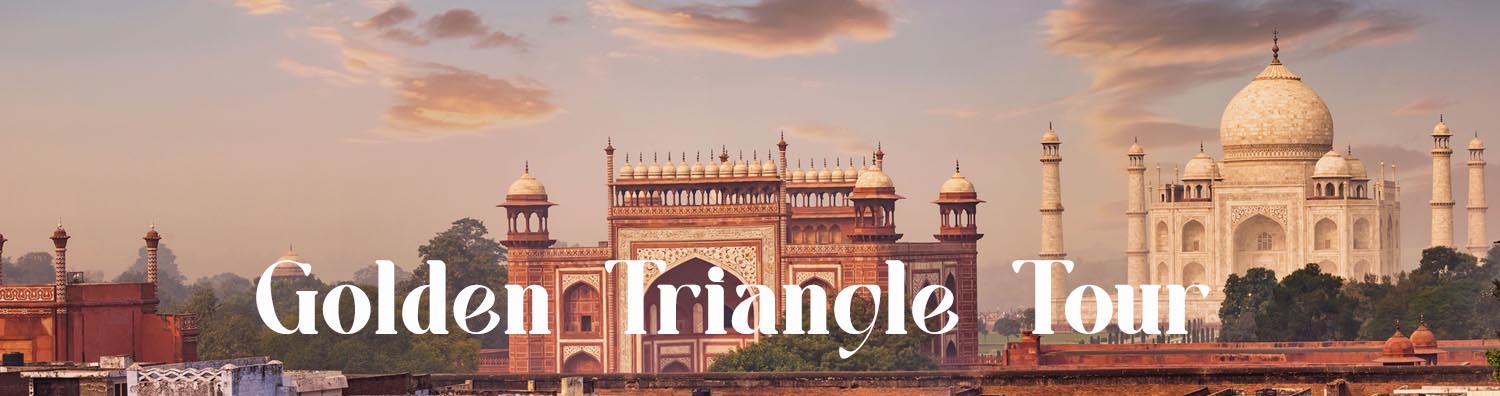

Through unique travel experiences, NORTH INDIA CULTURE & WILDLIFE JOURNEY invites you to explore India’s most famous culture and wild life wonders connecting with the stories, people, and places that shape our shared human heritage. This journey is custom designed to foster curiosity, cultural and nature awareness, and a deeper understanding of the world. Nine UNESCO World Heritage Sites in 3 cities are included in this fascinating exploration. Samode, Nawalgarh & Mandawa are located in the heart of Shekhavati – an open-air murals museum offering a unique glimpse into an interesting period in Rajasthan history. Relish fourteen days in deluxe air-conditioned coach with escort and expert local guides
SCHEDULES:
October 1 to 14, 2026 & February 4 to 17, 2027
Schedule
Board the flight at 7.40 AM.
Namaste! When you arrive at Delhi Airport, our representative will welcome you with a fresh marigold garland and transfer to Welcomhotel ITC Dwarka (5-star) in New Delhi for overnight.
After breakfast sightseeing of Qutub Minar: its construction was initiated by Qutubudin-Aibak in 1198 CE upon becoming the first Sultan of Delhi. Qutubudin-Aibak was born in Turkestan of ethnic Mamluk descent. This was a region where youth went out to neighboring countries and joined their armies as mercenaries. They were enslaved when the army they were fighting with lost. Qutbuddin was sold to the Qazi (Islamic judge) of Nishapur in Persia. There he became favorite of his master because of his skills of horse-riding and archery among other warrior abilities. Qazi’s sons were jealous and they sold him after the Qazi’s death. He ended up as slave of Sultan Muhammad of Ghur province of Afghanistan. He led Sultan of Ghur’s army in the 1st and 2nd battle of Tarain and was appointed Governor of Lalkot, the capital of the last Hindu Chauhan dynasty kingdom. When Muhammad of Ghur was assassinated, Qutubudin-Aibak declared himself sovereign monarch and started the construction of Qutub Jami Mosque (a.k.a. Quwwat ul Islam Mosque) and Qutub Minar. The construction of minaret did not complete in his lifetime and many later Islamic rulers of various successive dynasties left their mark on this monument, which is now 5 stories high and 73 meters or 240 feet tall. The mosque was constructed using architectural elements of 27 Hindu and Jain temples that were demolished to build it. Much of the decorative pillars and facades of walls in the mosque were used without alteration in the new mosque, only the Arabic verses from the Quran were added new, sculpted by Hindu artisans who did not know the Arabic language and curved the endings of letters as they did with Sanskrit language carvings. Qutub Minar is a UNESCO World Heritage Site.
Later sightseeing of the Second Mughal Emperor Humayun’s Tomb – its architecture may have influenced the construction of the Taj Mahal in Agra. Emperor Humayun died just six months after winning the throne of Delhi in 1556 CE. His widow, Hamida Bano Begum (a.k.a. Haji Begum) supervised its construction under Mughal Emperor Akbar’s rule. Having recently returned from Persia and its architect, Mirak Mirza Ghiyath, being a Persian, the monument has elements of Persian and Hindu architecture blended in it. Many later Mughal rulers are also buried in this mausoleum. Humayun’s Tomb is a UNESCO World Heritage Site.
Proceed further for sightseeing of India Gate (the war memorial), Parliament House and Presidents House (from outside) and for lunch at Gulati’s Restaurant in Khan Market nearby. The British decided in 1911 to move their capital from Calcutta (now Kolkata) to Delhi. Edwin Landseer Lutyens and his friend Herbert Baker were chosen for designing various buildings in the new capital. In 1914 the First World War started and continued until 1918. After its construction completed, the British capital was moved to New Delhi in 1931. India Gate was originally a monument to honor the fallen Indian soldiers in World War I, But now honors Indian soldiers all subsequent wars.
In the afternoon stop by the Red Fort for sightseeing – the massive sandstone fort built by Shah Jahan on the banks of river Yamuna. The fifth Mughal Emperor Shahjahan moved his capital from Agra to Delhi in 1636 and started the construction of the walled “Shahjahanabad” city with 14 gates. The most important gates, Mori, Lahori, Ajmeri, Turkman, Kashmiri and Delhi Gates still exist along with remnants of the wall. Within the city there were many monuments constructed but the most ambitious project was the Red Fort – according to a horoscope done to determine the auspicious time for starting its construction, the work on building the Red Fort started on May 12, 1639. In the Emperor’s Balcony in Diwan-i-Am or the Hall of Public Audience, there are a set of marble panels that were made in Pietra Dure art by the Florentine jeweler, Austin de Bordeaux. The most famous of these is the one depicting Orpheus playing the flute. There are many other palaces in the fort that were decorated with inlay of semi-precious stones in marble. Red Fort is a UNESCO World Heritage Site.
Jama Masjid – is the largest mosque in India and stands across the road from the Red Fort, built by Mughal Emperor Shahjahan 1650-56 CE. It was originally called “Masjid-i-Jahannuma” or world reflecting mosque. Its construction was supervised by Vazir Saadula Khan and its chief architect was Ustad Khalil. About 25,000 people can pray here at a time.
Later ITC Dwarka Hotel in Delhi for dinner and overnight.
After breakfast at hotel, drive about 145 miles to Agra. Enroute sightseeing of the Tomb of Itmad-ud-Daulah. This is the mausoleum built under supervision of Empress Nur Jahan for her parents, Mirza Ghiaz Beg and Begum Asmat in 1628 CE almost 7 years after her father’s death. Mirza Ghiaz Beg received the title of Itmad-ud-Daulah or ‘Lord of Treasure of the Empire’ from Emperor Jahangir. This was the first Mughal mausoleum built in white marble and decorated with inlay of various shades of Jasper and black marble. It would have influenced the decoration using inlay of semi-precious stones in white marble in the world-famous Taj Mahal.
Upon arrival check in to the Seven Hills Tower Hotel, close to the Taj Mahal.
Lunch in a local restaurant. On the way to hotel wonder at a demonstration of the fine art of Pietra Dure (inlay of semi-precious stones on marble surface) at Subhash Emporium, Agra’s oldest emporium where the not for sale section has some artifacts with inlay work much finer than the most intricate art work in the Taj Mahal itself and perhaps the world’s best. Later be amazed by the largest collection of Zardozi Embroidery Art in India at the Sanskriti Imperial Gems Emporium. This embossed embroidery art is attributed to the Mughal Empress Nurjahan. It uses silver, gold and colored silk thread embroidery on silk and velvet background and is one of the unique arts originating in Mughal period.
After dinner in hotel enter into a dreamworld like atmosphere as you wonder at the gleaming white marble of the Taj Mahal with its semi-precious stone shining in full moonlight. Dinner and overnight in Seven Hills Tower Hotel.
Before sunrise experience the highlight of any India tour, the Taj Mahal in the golden glow of sunrise. Ample time in the vast complex for photographing and viewing the intricate Pietra Dure (inlay of semi-precious stones in marble art work, used in the exterior and interior of the monument.
Prince Khurram (later Emperor Shahjahan) and his father Prince Salim met their favorite future queens in a mock market called Meena Bazaar to celebrate the Persian new year festival of Nowruz in Agra Fort. Prince Salim wanted to marry Mehr un Nissa Begum, the daughter of Mirza Ghiaz Beg but Emperor Akbar did not want Shi’a influence in the royal family so he asked Mirza Ghiaz Beg to marry his daughter to an Afghan commander and had him posted in Bihar. Prince Khurram was third eldest and not initially in direct line of succession. He was betrothed to Arjumand Bano Begum on April 5, 1607 but Prince Salim delayed his marriage. After death of Emperor Akbar, Prince Salim ascended the throne with the title of Emperor Jahangir and it was only in May 1610 that Mehr un Nissa, the widow of the Afghan commander finally agreed to marry him. He honored her with the title of Nur Jahan (light of the world) after his marriage. One year later on May 10, 1612, Prince Khurram was finally allowed to marry his beloved Arjumand Bano Begum, who was the niece of Mehr un Nissa (her brother’s daughter and granddaughter of Mirza Ghiaz Beg). She received the title of Begum Mumtaj Mahal after her marriage with the Mughal prince. Begum Mumtaj Mahal was 19 years when they married. She was his constant companion and most trusted advisor. During their 19 years of marriage, she gave birth to 14 children of which only 3 daughters and 4 sons survived. The youngest son, Aurangzeb fought a war of succession against his elder brothers. One after the other he won against all of them, had all the brothers killed and then put his father, Emperor Shahjahan, under arrest in his own palaces in Agra Fort. Queen Mumtaj Mahal died on June 17, 1631 while delivering her 14th child, a daughter, Gauhar Ara Begum, who survived and lived in Shahjahanabad to a ripe age of 75 years.
The site of the Taj Mahal mausoleum was a garden palace of the Maharaja of Amber, Mirza Raja Jai Singh who was following the tradition of his ancestor as close to the Mughal rulers of Agra, Fatehpur Sikri and Delhi. The emperor asked him to give the palace and grounds back to him and gave him other properties in lieu. The queen was temporarily buried in Burhanpur where she died in 1631. The body was transferred to Agra and again temporarily buried in the northwest section of the garden of Taj Mahal where a red sandstone enclosure still marks the site of her temporary burial. The Taj Mahal mausoleum was completed in 1648 according to an inscription on its main gate. The tomb was built exclusively for Queen Mumtaj Mahal, so her grave stone is in the center of the grave chamber. Originally there was a very precious gold screen around the Queen’s grave which was embellished with precious stones. Emperor Shahjahan died on January 16, 1666 in Mussamam Burj Palace in Agra Fort. He was buried by the queen’s side and his grave stone is the one of the few architectural features in this mausoleum that are not symmetrical. For the burial of Emperor Shahjahan by the side of his queen, the golden screen was removed and replaced with a beautifully carved and with semi-precious stones inlaid marble screen. Taj Mahal, was designated as UNESCO World Heritage Site in 1983.
After breakfast at hotel enjoy sightseeing of Agra Fort. Emperor Akbar moved his capital to Agra from Delhi in 1558 but the construction of the Agra Fort started in 1565. It was built on the ruins of an earlier fort named Badalgarh. The first Mughal Emperor Babur had occupied this fort after his victory in the battle of Panipat in 1526 CE. His son, second Mughal Emperor Humayun was crowned in the old fort of Badalgarh in 1530. With about 4000 laborers and craftsmen toiling for 8 years the fort’s construction was completed in 1573. The entire fort was built with narrow flat brick masonry work and laminated with red sandstone from the stone quarry at Sikri village west of Agra. According the Emperor Akbar’s official biography written by his trusted friend, Abul Fazl, there were about 5000 buildings in the fort. Some of these buildings were demolished to make way for white marble palaces of Emperor Shahjahan, facing the Yamuna River, on the eastern side of the fort. Most of the buildings in western side were converted in to soldier’s barracks by the British East India Company. The western part of the fort is still occupied by Indian military. Emperor Akbar’s style was greatly influenced by the architecture of the states of Gujarat and Bengal. It is also very unique because it reflects Emperor Akbar’s tolerant religious philosophy. The best of example of his architecture is visible in the palace popularly called Jahangiri Mahal. In 1666 the great Maratha warrior, Shivaji met with Emperor Aurangzeb but the Mughal Emperor broke his promise and arrested him. He managed to escape in a spectacular manner by hiding in fruit baskets for distribution to poor. The Jat and Maratha rulers occupied Agra Fort in later years. Finally in 1803 the British East India Company captured it and demolished most of its monuments, only about 30 monuments have survived in the south-eastern side of the fort. In 1983 the Agra Fort was declared a UNESCO World Heritage Monument. Lunch at Salt Cafe Restaurant on Fatehabad Road near Taj Mahal.
After lunch visit Sikandara – the third Mughal Emperor Akbar’s mausoleum that he himself designed. Its construction started after the death of Emperor Akbar under supervision of Emperor Jahangir between 1605 and 1613. It is a five-storied building in red sandstone except for the top floor that is made of white marble. The cenotaph of the emperor on top floor is open, without a roof. The main entrance to the mausoleum was probably designed or at least had influence of Empress Nur Jahan. It is conspicuous from the Persian decorative motifs used with inlay of white and black marble in red sandstone. Later in afternoon time to relax and enjoy the vast grounds of one of the world’s most luxurious hotels. Dinner and overnight in Seven Hills Tower Hotel.
After breakfast at hotel, drive about 1 hour for sightseeing of the third Mughal Emperor Akbar’s deserted capital of
Fatehpur Sikri and the Sufi saint Sheikh Salim Chisti’s mausoleum in Jama Masjid.
Akbar did not have a male heir to his throne for a long time. He came to the Sikri village to seek the blessings of the Sufi saint, Sheikh Salim Chishti, who correctly prophesied that Emperor Akbar would have three sons. The emperor moved with his Hindu queen, Jodha Bai, to Sikri village to live with the saint and started building an alternative capital at the site which was earlier a query for red sandstone. The entire capital was built with red sandstone from the ridge on which it is located. The first-born son was named Salim after the Sufi saint. The second was named Murad or the longed one. The third son was named Daniel, probably influenced by the Jesuit priests from Goa who were invited by the emperor to teach him about Christianity. Emperor Akbar developed the philosophy of “Sulah Qul” – living in harmony with all religions. Later he developed his own religion, Din-i-Ilahi or faith of God. His dear friend and official biographer, Abul Fazl, was among the first to convert to the new religion which he described in “Akbar Nama”. Visit the grand Friday “Jama Masjid” and the mausoleum of Sheikh Salim Chishti, which was renovated using the white marble by later Mughal Emperors. After Emperor Akbar moved away from this capital, living there only 14 years, the capital was deserted for more than 400 years until Lord Curzon, British Viceroy of India ordered the Archaeological Survey of India to restore this fascinating capital and this renovation work is still going on. The palaces were all covered with wild forest and wild animals lived in the palaces. The “Dargah” or mausoleum of the saint was never deserted and people from Agra and nearby villages have been coming there to seek the saint’s blessings for centuries. The entire archaeological site of palaces and the mosque were declared a UNESCO World Heritage Site in 1986.
After sightseeing drive about half an hour to Udai Vilas Palace Hotel for lunch. Later drive further to Ranthambore National Park, one of the best preserves for viewing the Tiger in its natural habitat. There are about 70 tigers in the park. Arrive at Jungle Cave Resort, close to zones 1 to 5 of the national park, which have the best chance of view a tiger. You will definitely relish staying in a beautifully furnished tent, experiencing the incredible view of nature and lush green garden beauty.
Dinner and overnight at Jungle Cave Resort.
Begin your day with an adrenaline rush by embarking on a morning safari. As one of the biggest national parks in northern India, Ranthambore is home to a huge variety of mammals, birds and reptiles. Although it’s primarily known for housing the Royal Bengal Tigers, you might also be able to spot leopards, sloth bears and crocodiles when you’re cruising along. Enjoy a free afternoon before setting out on the safari again in the late afternoon for more wildlife watching.
Dinner and overnight in tents at the Jungle Cave Resort.
Relish the thrill of two more Tiger safaris, an amazing experience that will be etched in your memory.
After breakfast at the resort, drive about 145 kilometers or 90 miles in about 3 hours to Jhalna Leopard Reserve with about 30 leopards and cubs apart from a wide variety of other wild animals. Enjoy the leopard safari from 3.45 PM to 6.15 PM.
Later drive about 15 minutes to Sarovar Premier Hotel for dinner and overnight.
After breakfast full day sightseeing of Amber and Jaipur starting with a drive through the walled pink city to Hawa Mahal, which is mere facade with about 3 feet deep balconies behind latticed screens where royal family women used to sit to watch the royal processions on the street.
Drive further north through pink city to Amber Fort to enjoy a majestic elephant ride to the hilltop palaces of Sawai Jai Singh, Mirza Raja Jai Singh and Maharaja Man Singh (one of nine jewels of Emperor Akbar’s cabinet of nobles). The Sheesh Mahal and other palaces in the courtyard were constructed during the reign of Mirza Raja Jai Singh I, who was contemporary to Mughal Emperor Shahjahan and had arranged the transportation of white marble from the Makrana marble mines for building the Taj Mahal. Amer Fort was inscribed as UNESCO World Heritage Monument in 2013. On the way back stop at the Jal Mahal Island Palace. Lunch will be in a local restaurant.
Jaipur City was designed by Maharaja Sawai Jai Singh and his principal architectural and city planning advisor, Vidhya Dhar Bhattacharya. On July 6, 2019 the entire walled and painted pink city has been declared a UNESCO WORLD HERITAGE CITY.
In the afternoon visit the City Palace including the Royal portraits gallery in the Diwan-i-Am (Hall of Public Audience), the Sarvatobhadra (Hall of Private Audience), the Mor Chowk (peacock) courtyard of Chandra Mahal, the palace where the present head of the Jaipur royal still resides. When he is in the building the family’s royal flag flies on its roof.
Later wonder at the 16 working astronomical instruments of the Jantar Mantar observatory of Maharaja Sawai Jai Singh. The Brihat Samrat Yantra (large sundial) here has an accuracy of 2 seconds. This masonry astronomical observatory is the largest and best maintained of the five observatories constructed in Ujjain, Varanasi, New Delhi and Mathura. The Jaipur Jantar Mantar observatory was declared the UNESCO World Heritage Site in 2010. The observatory in Mathura was demolished in the colonial British East India Company period. Later rickshaw ride in heritage walled city and Sarovar Premier Hotel for dinner and overnight.
After breakfast at hotel drive about 45 kilometers or 25 miles in about an hour to Samode Palace. Located in the midst of a village of same name, this is an ancient palace dating from 16th century. The fortified Palace unveils a majestic stairway against the backdrop of the stunning sandstone structure with the Aravilli mountains beyond. Known to be one of the finest masterpieces of Indo-Saracenic architecture that seamlessly blends traditional Rajasthani design, the Palace boasts a labyrinth of Mughal arched doorways, intricately hand painted murals in vibrant hues that adorn walls and ceilings, an alluring Sheesh Mahal, bougainvillea-fringed courtyards and more. After sightseeing of the palace and lunch proceed further 116 kilometers or 72 miles to Nawalgarh for sightseeing of the Anandilal Poddar, Bansidhar, Murarka and Chowkhani Havelis. Subsequent to sightseeing drive further 30 kilometers or 19 miles in about 40 minutes to the Radhika Haveli or Shahi Palace, in Mandawa for dinner and overnight.
After breakfast at hotel, sightseeing of the 100 years old, Aakharam ki Haveli, located near the Sonthalia Darwaza in the middle of the Mandawa town, Hanuman Prasad Goenka Haveli, Goenka Double Haveli, Murmuria Haveli, Jhunjhunwala Haveli, Mohanlal Saraf Havei, Gulab Rai Ladia Haveli, Bansidhar Newatia Haveli, Laxminarayan Ladia Haveli and Chowkhani Double Haveli. Just across the road from Goenka Double Haveli is the Thakurji Temple that also has beautiful mural paintings depicting scenes from British East India Company Period and 1857 during the First War of Indian Independence. During sightseeing lunch will be in a local restaurant.
Dinner and overnight in Radhika Haveli or Shahi Palace.
After breakfast drive to Ashok Country Club in New Delhi with stop for lunch at a midway restaurant. Some rooms will be available for refreshing at the club. Farewell dinner and later transfer to Indira Gandhi International Airport for board the return flight to Los Angeles.
At 3.10 AM fly from New Delhi to arrive in Los Angeles at 11.53 AM.
Additional Information:
Hotels used in our journey
| CITY | HOTEL | No. of nights |
| NEW DELHI | Welcomhotel ITC Dwarka (5-star) | 2 |
| AGRA | Seven Hills Tower Hotel | 2 |
| RANTHAMBHORE | Jungle Cave Resort Tents | 3 |
| JAIPUR | Sarovar Premier Hotel | 2 |
| MANDAWA | Radhika Haveli or Shahi Palace | 2 |
| NEW DELHI | Ashok Country Club | For refreshing and farewell dinner |
| Price in double/twin rooms | US$ 3.890 per person | GROUP OF 14 to 28 persons |
| Single room occupancy supplement | US$ 670 per room |
INCLUDED IN THE ABOVE PROPOSED ITINERARY:
- 11 hotel overnights accommodations in the mentioned or similar hotels inclusive of taxes on double or twin room occupancy basis. Daily buffet breakfast and dinner at your hotels. Lunches in city restaurants or as described in itinerary
- Deluxe AC coach as per the
- Daily bottled water in car
- English speaking local guides as per program
- Assistance at each city by our company’s local
- Rickshaw ride at Jama Mosque in
- Elephant ride at Amber Fort in
- Boat ride in Pichola Lake with sightseeing of Jag Mandir Island Palace
- Farewell dinner in Delhi
- All taxes, parking fees, interstate taxes, state taxes, driver’s allowance
- Valid from 20 Oct 2026 till 30 Oct 2026 based on 10-25 people traveling
NOT INCLUDED:
- Cost of India Visa and travel Insurance
- All drinks in hotels & restaurants
- Still and Video Camera Fees at monuments
- Tips to drivers, guides and porters as well as any item not included in the above (included) list
- All expenses of personal nature like telephone calls / laundry / room service charges in hotels
PAYMENT:
Full payment by personal check or Visa/MasterCards after registration and all arrangements (roundtrip international airfare and land arrangements in India) confirmation. Form for registration will be sent.